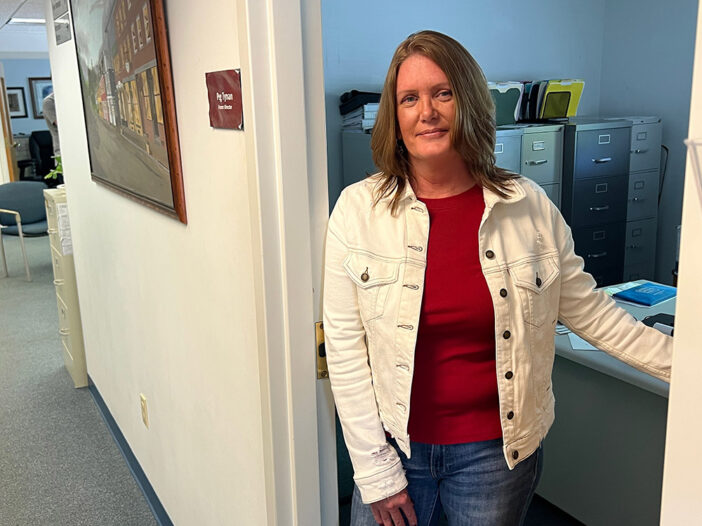
On Tuesday, June 10th, Waldoboro townspeople will vote on the 2026 budget. On the ballot are 52 articles, all of which were individually reviewed, discussed and modified over a series of seven meetings in March and April. Fourteen elected citizens of Waldoboro, members of the Select Board and the Budget Committee, listened and posed questions to department heads when they presented and amended their budgets for 2026. They scrutinized every dollar. In the end, they agreed to a town budget of about $8.5 million. The meetings were open and recorded. Yet despite that, just two members of the community attended them. But if you had been there, you’d have witnessed great seriousness, cooperation and respect. In public service, there are public people – our Board, our committees, and our town manager – and the people behind the scenes. Peg Tynan, the town’s Finance Director, is one. Even in the budget meetings, while she is present, she is not the focus. Rather, she sits the side, there to answer, elucidate or confirm any questions or confusions about the numbers or trends. And this is probably as public as she gets. Back in her office, she’s paying our bills, monitoring the benefits of the town’s employees, and working with everyone and anyone to problem-solve or explain anything pertaining to our budget.
When my grandmother passed away in 1986 leaving us a little money, my father used it to buy my brother and me a Commodore 64. We each had our favorite games. My brother’s was Asteroids; mine was Lemonade Stand. When I look back on it, it was all about accounting! You had to look at the prices to see what your lemons were, and what your sugar was and your cups, too. And you had to make allowances for the weather. I loved that game.
I know some people get scared of numbers, but they’ve always felt normal to me. In my family, my brother, father, and uncles were all math teachers and computer programmers.
I like numbers because they are clean and clear, with no ambiguity as to what things are. I started working in accounting when I was in high school and then through college. Numbers allow you to track changes and see if things are improving or not. After college I worked for a firm doing accounting for a lot of different kinds of businesses, and I discovered that numbers also reveal the priorities of a business, which is always about making more money, but with different ways to get there.
I had never worked in government or for a non-profit before I started working in the Town Office. It was always corporate. If taxes are going up for them, it was just business.
In Waldoboro, though, it is personal. Residents come in worried about their taxes going up. Some are neighbors, and that makes it more personal. And I live here, and I pay taxes, too. I am thinking about the taxpayer all the time, and what they can afford. And that can make decisions hard.
We’ve always been a conservative town regarding the budget. Years ago, departments would even count to how many pencils they thought they’d need for the following year. But we still count bigger items like how many gallons of fuel might they need, and what do they think the price of fuel is going to be.
My job in the budget meetings is to be there as a resource for any questions or confusions that come up. And being quiet is something that goes with my personality. On the other hand, one of my favorite things to do is demystifying the complicated. And sometimes I’ll watch the conversation go around and around as people struggle over an item, and that’s when I get the wiggles. Sometimes I’ll put my hand up. But I’ve come to see that it’s better to wait. A lot of our board and committee members have been in their jobs a long time, and they have long memories. So, even though I want to chip in, if I wait, it almost always works itself out.
Everyone works really hard to present a budget that’s going to be okay for the taxpayer, our tax base. Everyone is worried about their tax bill. And the Select Board and committee members hear that, too. That’s why they do everything they can to mitigate any increase. They are trying to keep the budget the same as the year before.
To make zero change, though, we have to make a lot of compromises. And zero change is almost impossible because there are so many unknows about the school and the county;s budgets. Not to mention the uncertainties that nobody can control, like the price of oil or goods.
We just do our best.
All year long, the department heads meet with Julie to stay on track while also trying to anticipate what might happen financially the following year. It’s collaborative. Even before we finish this year’s budget, we’re thinking about both next year’s and the year before. I’m constantly looking at three fiscal years’ windows.
One tiny part of the budget that gets a lot of scrutiny is the Human Services section of the budget, like the Library, Food Pantry, Healthy Kids, Midcoast Conservancy and so on. Some people say, “Why should the Town contribute to institutions and non-profits that can raise money from the private sector?”
But others figure, “If I don’t donate to the Library or Food Pantry, at least the Town is doing that, because those things benefit a lot of people in town.”
I say it’s a matter of perspective. People have very strong opinions one way or the other. I understand both sides. I’ve lived here a very long time.
Reaching an agreement on the budget is an amazing process. Julie is always calling it “the most wonderful time of the year,” and I agree with her.
But before I was hired, I’d never attended any of those meetings. And once I did, I learned about all the things Public Works does to maintain their own equipment, down to re-building trucks. Which saves the town tens and tens of thousands of dollars. As both a taxpayer and as someone in finance, I found that very enlightening.
I wish more people came to these meetings. Getting people to understand the underpinnings of the budget is the most difficult thing. Being there would clear up a lot of misunderstanding. We, as a Town, have done so many things to hold costs down. That’s why we closed the Town Office on Fridays a few years ago. We did it as a budget constraint. Last year, EMS restructured their staffing model to reduce overtime, and that saved money.
There’s out lots of information out there, both online at our website, and in the Voter Guide that Pam Jameson puts together. But to understand the budget, you have to be at the meetings.
Leave a Reply