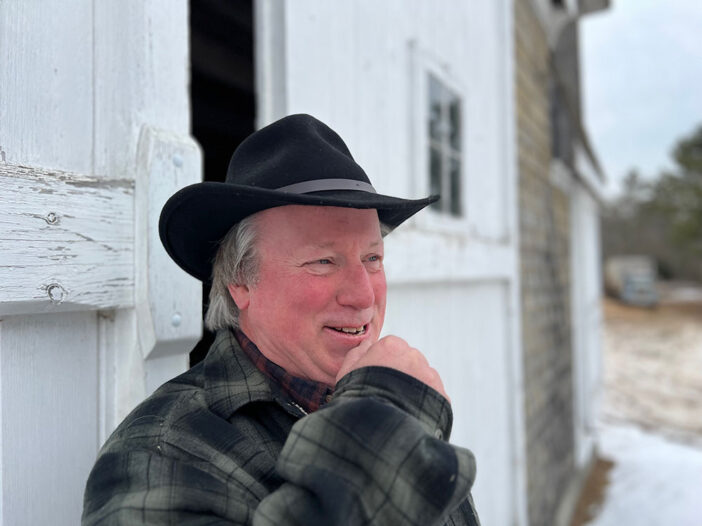
Be it birds, animals or humans – all parents strive to pass what they know to their children; and then they watch their offspring take off and fly. This was true of David Lawrence, who passed down everything he knew, and especially his knowledge of electricity and wiring to his son Matthew. Matthew Lawrence did his parents proud. No, he wasn’t the best student at AD Gray. But he was a wiz in electronics and electricity. He could have gone into the Army or Navy, but he chose the New England Institute of Technology in Rhode Island. He took night courses because by day he worked as an electrician. He graduated with a 3.8 grade average and joined an electric utility that promised management training. They put him to work in every department: business, commercial, field engineering, underground lines, and finally substations, where he found his true home. Eighteen years in, Matthew was managing 54 substations and a department of 24 people. When a behemoth of a utility bought his company, Matthew stayed on. He was so good at what he did that he floated to the top and stayed there no matter what subsequent whales of companies bought them out. He was on-call 24 hours a day. After the last shake-up, he left the utility. He found work almost immediately at Doble, a company known for building and testing equipment for substations. He worked on almost every continent. When the company re-located to the Land of the Mouse (Orlando), he met Renee, a chemist, and married. Together they invented an electronic system for securely testing substation assets for which they got a patent, and that has given them a new freedom. And with that, they moved to Waldoboro last year. Matthew doesn’t know what is next. He is settling in. He calls himself semi-retired; but then again, he’s David Lawrence’s son.
For me, Waldoboro will always be home. And even though it’s not Renee’s history, I think she loves it, too. We are living in my parent’s home, the one they bought in 1976, the place that used to be Donald Eugley’s hen farm. I see my childhood everywhere. I see my dad’s work. I see my mom here. I see my brother Andrew growing up with me.
I see now why Dad brought us all home to Waldoboro, too. There’s something about this place, and this town, that just draws you to it. I’m at peace here. I don’t have to be on alert like I felt when I was living in Florida. And there’s no traffic. I am definitely over those city things.
I am myself in Waldoboro. I understand the people here. I think we are a friendly people. We are both Mainers and from Waldoboro. Of course, we’re also skeptical at first. We give newcomers a bit of a berth. We hold back to see who they really are. And then we accept them for whatever they are. And either you’re with them, or you give them a wider berth. You won’t find people more true to their beliefs than here. They love this town, and they love this land.
It’s the history that really gets me about this place. I guess get that from my parents. Waldoboro’s is a deep history, a serious history, that goes from the Old German Church to the shipyards to the original German settlers whose descendants are still here, like the Winchenbach’s and Benner’s.
And, I had all these different experiences here, too. I worked for my dad, and we went everywhere in Waldoboro and around, doing electrical wiring inside all kinds of houses. That was just one thing though.
Our neighbor Virginia Light invited me to pick eggs with her. Her husband Charlie Light who worked at Sylvania at night, and cared for his farm with sheep, cows and chickens by day, lobstered, and he’d take me out with him. Then, because I liked to sit in the field and watch the mowing, Howard Reed pulled up and said, “You want a ride?” I worked on that farm all the way through high school.
I was a kid who said ‘yes.’ If someone invited me to work for them, I’d do it. That’s why I had those experiences. I believe there’s no such thing as ‘no,’ and I’m probably like my father in this. He always felt, and I do, too, that there’s always a way to get something done. ‘No’ cannot be the first answer.
The world will open up if the answer is ‘yes.’ Even if one ‘yes’ does not work, it opens up another path. It’s like being an electrician. There are so many different ways and so few absolutes. Instead, there is a lot of gray. I think people don’t delve deeply enough into the gray.
I learned by watching. I’d sit on the fender of Howard Reed’s tractor, way up high, and watch everything he did as he mowed the field. I learned how he ran that machine, and all his machines. Any machine he touched did exactly what he wanted it to do. He was a master, and always fluid in his movements.
But I also had plenty of hands-on, not just with my dad. At the Reed Farm, it was cutting hay, tethering it, and then baling it, and each one used a different machine. I learned to work on machines there, and to repair them, and in time, and to use them and drive them. And when the farm took on work for the canning factory by growing squash, I helped to prepare the fields, to fertilize them, and to plant the squash, by hand. We had fields all over Waldoboro.
All of that is gone now. There’s a kelp factory now on Route 32, and the seaweed factory, too. When they first started up, I remember the smell, so weird and different. I remember everyone saying, “What are they thinking, making fertilizer out of seaweed? Are you kidding me?” We were skeptical. It was something new. Different. It wasn’t what we knew, which was farming, lobstering, clamming, and Sylvania.
I’m glad those factories are still here, I’m glad that they’ve grown. They’re part of Waldoboro now. Reed Farm has changed, too. Travis Reed, Howard Reed’s grandson, now runs it. There’s cattle, but there’s no more hens, no more squash. But the farm is still here.
And I am here now, too, in my parents’ house, among many of their things. I don’t see their ghosts, but I feel their spirit. And I hear my father saying, “I approve.”
Leave a Reply