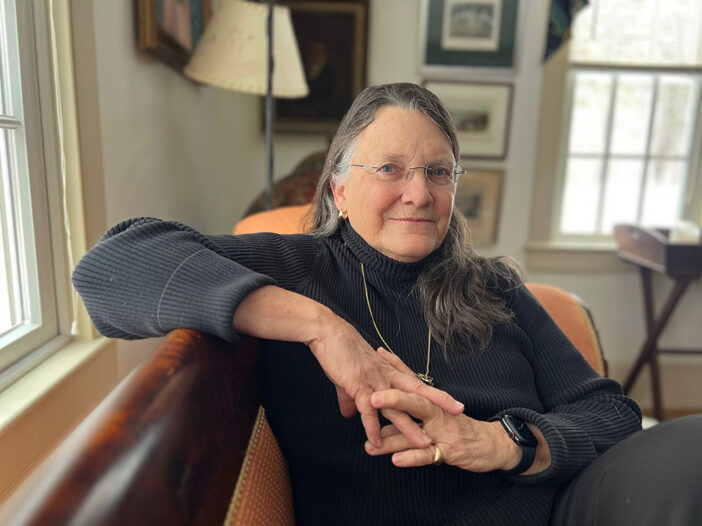
Josie Heyneker grew up in a Pennyslvania town where her father was the pediatrician. With his office inside their home, the doctor’s office was a familiar place where Josie would watch her dad sterilize instruments, change the linens on the examination table, and review patients’ files at the end of the day. You might think this would have led her to medicine. But it didn’t. She went to music school to study voice and met her husband Van. After they married, she pivoted and ran a department for Chase Manhattan Bank’s credit card division. After the S&L crisis, she turned around again, this time, to help build Van’s restoration and cabinet-and-furniture-making business by taking over the bookkeeping, taxes, inventory and sales. One day, the managers of the estate where Van had been doing some long-term work, approached Josie. They wondered if she would take on housekeeping and being a companion for the wife who was showing signs of early dementia. Their present housekeeper/companion was leaving. Josie thought it could be interesting. It turned out to be a life-changing choice. Three years later, the woman’s husband died. Josie stayed on for another fifteen years. She (and Van) also got to know Maine because the couple summered on a Midcoast island, leading Josie and Van to settle in Waldoboro. And the Josie, the experience transformed her.
I was with her when she took her last breath and I was on one side, and her granddaughter on the other. We kissed her as she passed.
One of the questions she’d asked early on was, “Who is your family? Bring in some pictures.” I brought them in, and she recognized my family! She remembered my father! She adored him. We learned we shared a lot, and it surprised us both.
She was the kind of person who was genuinely interested in people’s lives. She said to me early on, “I find it so interesting that you’re a caregiver. How did you get into that?”
Dinner conversation was never about her. It was always about the other person, and that made people feel included. I’ve never forgotten that. I think it’s a place of humility.
Taking care of someone is a very intimate thing. My father taught me to honor people’s privacy. We all have the same body functions every day. The same needs.
In the beginning, when I didn’t know her well, I was very conscious of sharing that intimacy. I went slowly, because I wanted to respect her. And I would let her know each thing I was going to do before I touched her, whether it was helping her walk from one room to another or helping with her daily needs and personal care.
I also studied. I read everything I could find about dementia. And I learned about something called “therapeutic fibbing.” So, I’d say, “Let’s go in here and have some ice cream,” even though we were actually going into the shower. It was a gentle approach, and she trusted me.
My father taught me to respect people’s dignity. No one wants to lose their independence. Anyone who has lost an ability, whether mental or physical, wants to feel respected. They do not want to feel they’re being waited on. So, I would always say, “You do it.”
We shared sweet times. She loved Frank Sinatra, so I brought in CDs of him singing. I don’t think they’d had much music in the house before that. We’d talk. She taught me how to knit. We’d look at old photographs together. But whatever we were doing, I was always listening to her emotions.
That relationship deepened my other relationships. I’m not afraid of people’s emotions now. If I sense a need, I’m not afraid to ask what it is that they need.
Something really important in caregiving is, if you see something, say something — no matter how ridiculous it might seem. It could be something important. The corollary is true, too. My dad always said, “Listen to your body because your body will speak to you.” I tell that to anyone I’m caring for.
He also said, “The squeaky wheel will get the grease.” I’m not shy about being an advocate.
I just turned 70, and I’m an example that you can teach an old dog new tricks.
About five years ago, someone approached me to care for her grandmother who was recovering from a terrible fall that had paralyzed her from the waist down. I’d had tons of experience, but I didn’t have a certificate or license. So, I went back to school to get it, and since then, I’ve been caring her grandmother. Her care now is 24-7, and there are seven of us looking after her. I helped hired many of them, and I’m proud to say that we’ve had zero turnover.
Caregiving is not like any other job. It is a huge responsibility. A mistake can have enormous repercussions for the patient. You can’t afford to let a patient fall. And God forbid, you give them the wrong medicine or dosage. Someone could die.
That’s why I think compensation is important, because when people are compensated fairly, they have loyalty. When a patient has continuity, they have better care.
The woman I care for now used to be very private, but in being paralyzed and having to depend on people, she has chosen to approach her new life with grace and humor instead of anger, and that’s really touched me. She’s also shown me how important it is to be kind to people — something I always knew, but she’s magnified this for me.
We live in such a angry, litigious, non-caring environment. So, I’ve made it my mission to be kind to people. If I see someone who looks lonely or forgotten, and often it’s older people, I’ll go over to them and say hello and something like, “I love your hat,” or give them a big smile, or just make eye-contact, because I want to make a connection. I am thinking about my dad as I say this, because even though he knew everyone, no one ever came up to him in the supermarket. I wish it hadn’t been like that. I want to spread the kindness, the joy. This is something I’ve really been taking to heart.
I
was with her when she took her last breath and I was on one side, and her
granddaughter on the other. We kissed
her as she passed. One
of the questions she’d asked early on was, “Who is your family? Bring in some pictures.” I brought them in, and she recognized my
family! She remembered my father! She adored him. We learned we shared a lot, and it surprised
us both. She
was the kind of person who was genuinely interested in people’s lives. She said to me early on, “I find it so
interesting that you’re a caregiver. How
did you get into that?” Dinner
conversation was never about her. It was
always about the other person, and that made people feel included. I’ve never forgotten that. I think it’s a place of humility. Taking
care of someone is a very intimate thing.
My father taught me to honor people’s privacy. We all have the same body functions every
day. The same needs. In
the beginning, when I didn’t know her well, I was very conscious of sharing
that intimacy. I went slowly, because I
wanted to respect her. And I would let
her know each thing I was going to do before I touched her, whether it was
helping her walk from one room to another or helping with her daily needs and
personal care. I
also studied. I read everything I could
find about dementia. And I learned about
something called “therapeutic fibbing.”
So, I’d say, “Let’s go in here and have some ice cream,” even though we
were actually going into the shower. It
was a gentle approach, and she trusted me. My
father taught me to respect people’s dignity.
No one wants to lose their independence.
Anyone who has lost an ability, whether mental or physical, wants to
feel respected. They do not want to feel
they’re being waited on. So, I would
always say, “You do it.”We
shared sweet times. She loved Frank
Sinatra, so I brought in CDs of him singing.
I don’t think they’d had much music in the house before that. We’d talk.
She taught me how to knit. We’d
look at old photographs together. But
whatever we were doing, I was always listening to her emotions. That
relationship deepened my other relationships.
I’m not afraid of people’s emotions now.
If I sense a need, I’m not afraid to ask what it is that they need. Something
really important in caregiving is, if you see something, say something — no
matter how ridiculous it might seem. It
could be something important. The
corollary is true, too. My dad always
said, “Listen to your body because your body will speak to you.” I tell that to anyone I’m caring for. He
also said, “The squeaky wheel will get the grease.” I’m not shy about being an advocate. I
just turned 70, and I’m an example that you can teach an old dog new
tricks. About
five years ago, someone approached me to care for her grandmother who was
recovering from a terrible fall that had paralyzed her from the waist
down. I’d had tons of experience, but I
didn’t have a certificate or license.
So, I went back to school to get it, and since then, I’ve been caring
her grandmother. Her care now is 24-7,
and there are seven of us looking after her.
I helped hired many of them, and I’m proud to say that we’ve had zero
turnover. Caregiving
is not like any other job. It is a huge
responsibility. A mistake can have
enormous repercussions for the patient.
You can’t afford to let a patient fall.
And God forbid, you give them the wrong medicine or dosage. Someone could die. That’s
why I think compensation is important, because when people are compensated
fairly, they have loyalty. When a
patient has continuity, they have better care.The
woman I care for now used to be very private, but in being paralyzed and having
to depend on people, she has chosen to approach her new life with grace and
humor instead of anger, and that’s really touched me. She’s also shown me how important it is to be
kind to people — something I always knew, but she’s magnified this for
me. We
live in such a angry, litigious, non-caring environment. So, I’ve made it my mission to be kind to
people. If I see someone who looks
lonely or forgotten, and often it’s older people, I’ll go over to them and say
hello and something like, “I love your hat,” or give them a big smile, or just
make eye-contact, because I want to make a connection. I am thinking about my dad as I say this,
because even though he knew everyone, no one ever came up to him in the
supermarket. I wish it hadn’t been like
that. I want to spread the kindness, the
joy. This is something I’ve really been
taking to heart.
Leave a Reply