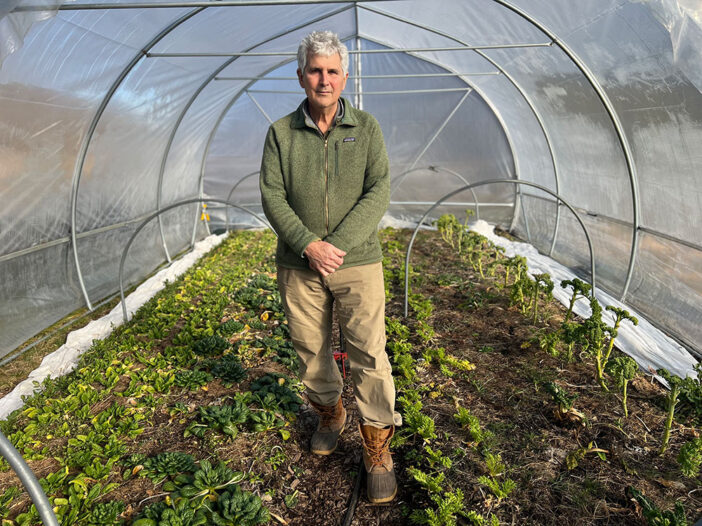
While still in the cradle, John Guarnaccia was mimicking the sounds of a robin,“a-MA-ki-ki, a-MA-ki-ki.” Still, it took John eighteen years to return to birding, and when it did, it was almost all he did in his spare time. In fact, it led him to transfer to Cornell’s College of Agriculture and Life Sciences where he earned a degree in environmental science. Shortly after, he embarked on learning Spanish and met his wife Mercedes, who encouraged him to work on conservation projects in Latin America and the Caribbean. Together, they translated into Spanish Robert Ridgely’s “Birds of Panama,” the first field guide on tropical birds, an astounding feat given the sheer number of birds, over 1,200 species. From there, John received an offer to join the RARE Center for Tropical Bird Conservation. He started with a project working with local groups in the Caribbean islands to identify the birds that were on the verge of extinction and to promote their work in protecting them. More projects ensued. Soon after, he became RARE’s executive director. John’s curiosity about wildlife extended in all directions, including insets. He even has a cockroach named after him, la cucaracha de guarnaccia. But when RARE grew so that the responsibilities became overwhelming, he left. Besides, Mercedes and he had another plan: moving to Maine. They had summered on an island in the Kennebec River and loved it. And when John got a job offer at the Island Institute in Rockland, they knew it was time to head to Maine.
We made a list of everything we wanted in a place: good soil and I checked the soil maps; community; lots of wildlife; a house that didn’t need much work because I’m not handy; and maybe a garden that was already established so we could get going quickly. We found it in Waldoboro. What sold me was the pond out back, a marsh hawk over the field and a coyote at the edge of the forest. We moved in the winter of 1997 in a snowstorm.
I worked in development at the Island Institute, but after two years or so, I realized it wasn’t the job for me. I struck out on my own, working on different projects like establishing a botanical garden in San Juan and looking at the effects of wind energy on Puerto’s Rico’s birds and other wildlife. That kind of conservation concern was a new field at the time.
That project led to other projects. I was analyzing the impacts of windfarms on bird and bat populations across the United States. Using my knowledge of wildlife, and through data analysis, I concluded that, at least for small birds, windfarms do not generally have an impact on their populations.
Bats are another story. They are long-lived, and they might only produce one young per year. So, when turbines start taking them from the population, there’s the risk of having bigger effect on bats’ overall population. It was challenging and interesting work. It drew upon all my experience.
But a few years ago, I got cancer. I have left the field entirely.
I still think about bats, however. When we first moved here, we had hundreds of little brown bats roosting in our barn and under the shingles of the house. I’d wake up before dawn, at twilight, and listen to them scurrying under the shingles. I loved that sound. Then in bed at night, I’d hear their squeaking because we had a maternity colony along our central chimney, on the other side of the sheet rock. I can’t say Mercedes liked it, but I found it wonderful.
These bats would summer here before migrating to the limestone caves or old mines in New York State. It was not a long migration, but perfect because they could hibernate without threat of cold temperatures, with a nice, even environment to help them energetically survive all the months not doing anything.
Then, they disappeared almost overnight. They’d caught white nose syndrome, a disease from Europe that somebody brought over — maybe it was a cave explorer, maybe a bat biologist who introduced the fungus into a cave in New York and the disease spread from there.
These bats have turned into a rare and endangered species. We still have bats, but I couldn’t tell you what species they are. I have no way of knowing what is happening to the little brown bat.
But what if we had a citizen science project to find out more, extending from the Sheepscot to the Medomak? I think it would be exciting to get people out at night to find out where these bats continue to exist and to protect those areas. There are acoustic devices that can hear a call that is silent to humans and not only record the call but identify which species of bat it is. With that, we could identify where the endangered bats continue to have their maternity colonies. Any large tract of forest would be a good place to sample. And with that knowledge, organizations like Midcoast Conservancy could take steps to protect them. I would love to this happen because I miss the little brown bats.
In the meantime, I’m loving gardening, and I’ve gotten pretty good at it. I think of myself like market gardener, with a greenhouse that works for us even in winter. Right now, the spinach is waking up in the hoop house along with the arugula and tatsoi. The carrots have overwintered and are sweet. I have 300 heads of garlic just showing their sprouts. Later, we’ll plant tomatoes, peppers, eggplant, melons, what have you. And come fall, we’ll pick apples from the old trees in the yard and make cider from the wild trees in the woods. It’s a good life.
Leave a Reply