The first peoples of Waldoboro were the Penobscot, Maliseet, Micmac, Passamaquoddy and Abenaki. In fact, the word Medomak is Abenaki for “the place of many alewives,” and the Medomak is the river that runs through and divides Waldoboro.
As far as archaeologists can determine, these were nomadic nations, arriving and leaving by the season. In Waldoboro, no evidence of a permanent indigenous settlement has been discovered yet.
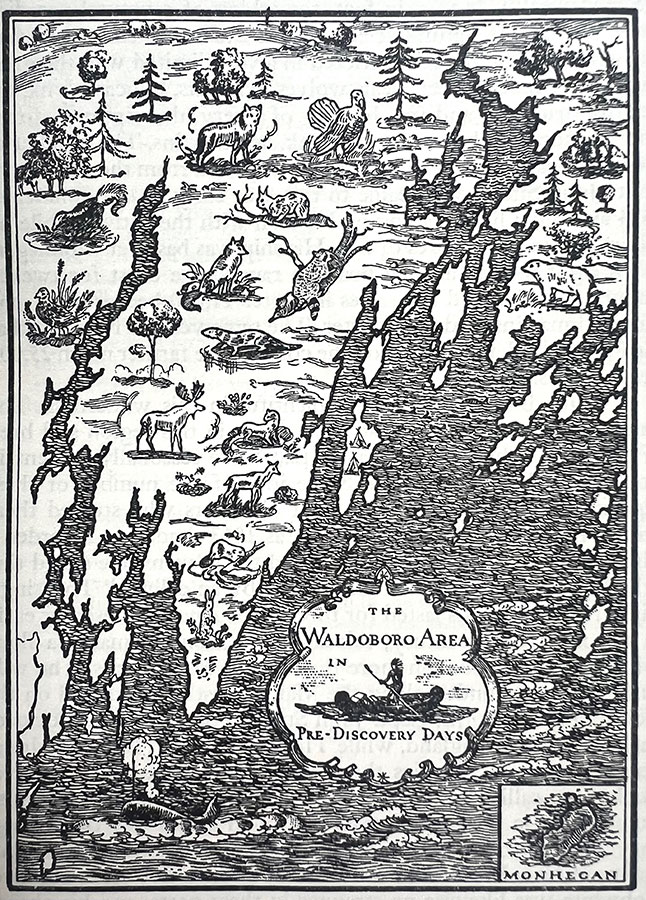
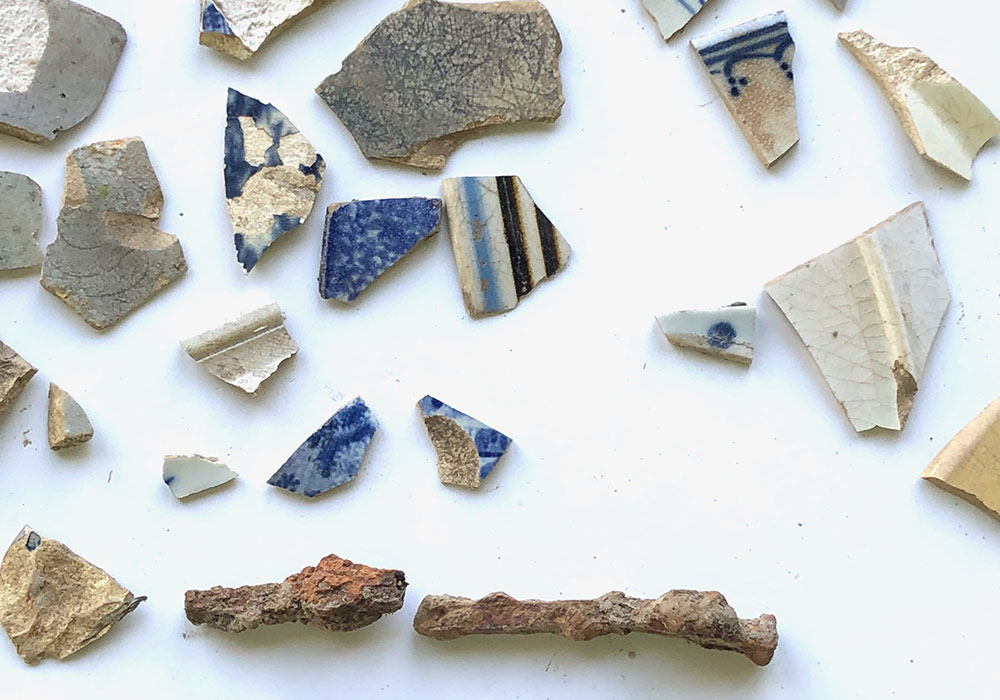
The English immigrants were the first to set down permanent roots, on the north side of the river. By the early 1700s or before, they’d built small, primitive houses and a garrison for refuge for refuge in bad storms and from attacks.
On the other side of the river, in 1742, a ship unloaded about forty German families. They had been lured by the Englishman Samuel Waldo who was eager to establish and claim a community. To find settlers, he solicited from the poorest parts of Germany. He promised 100 acres of fertile land for each family.
However, the ship arrived in mid-November. The Germans, impoverished and weakened from the long voyage, found themselves suddenly in of dense forests with winter close behind them.
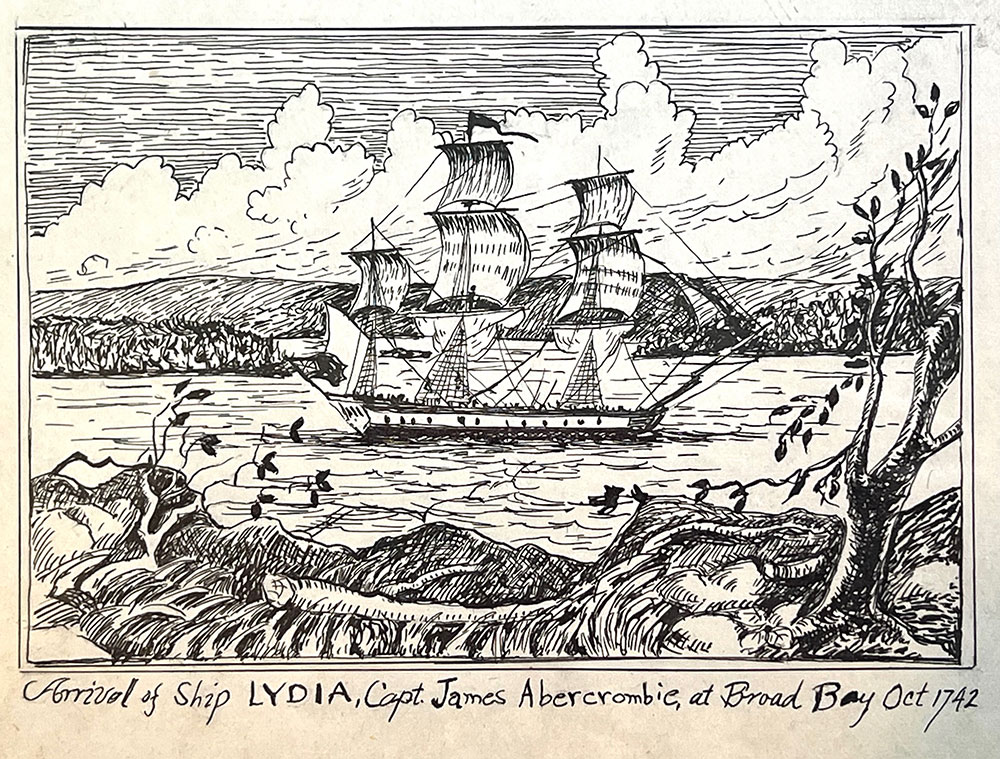
Drawing by Paul & Allison Wescott, History of Broad Bay and Waldoboro by Jasper Stahl, Vol. 1, 1956
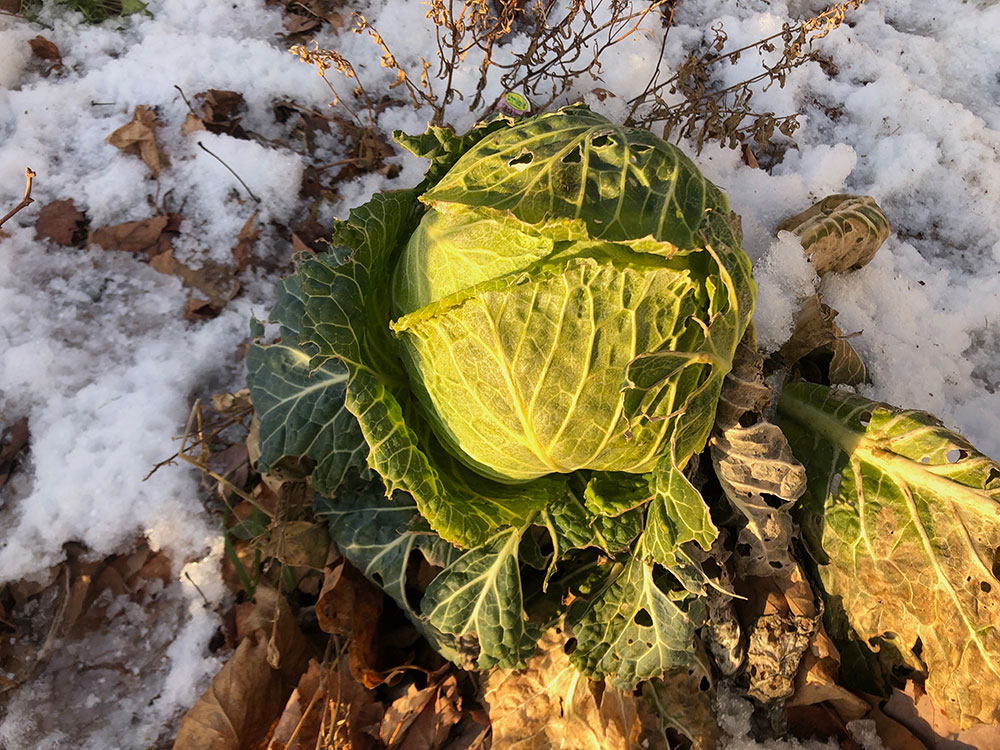
It’s a miracle that some survived that first winter. They both had to cobble together shelter and scavenge for food at the same time before the ground froze.
When spring arrived and the earth could finally be worked, they cleared, and then they tilled their small clearings for planting. But it was not the fertile soil they were promised. It was rocky and clay-like.
They also did not find safety. From the ends of their small clearings, the Indian nations watched. And when they could, they raided the new settlers’ crudely built shelters and killed some of the settlers. While each people loved and cared for the land, they had different assumptions about ownership and its use. It was a conflict that would never be resolved.
And the Lydia was only the first boatload of Germans. It continued a decade or more with more shiploads of Germans arriving each year, with better and better luck. With more settlers, they were able to establish a small community, united against harsh terrain and weather.
Together, they warded off Indian attacks. They assisted each other in clearing or building a barn. They worshiped together. They held on to their culture, language and feudal structure of organizing themselves. In many ways, they were a closed society, but that enabled them to thrive.
And this is what distinguishes Waldoboro’s Germans from the other waves of Germans in Colonial America who were melding into their new towns and cities, and so being absorbed into the larger culture all around them.
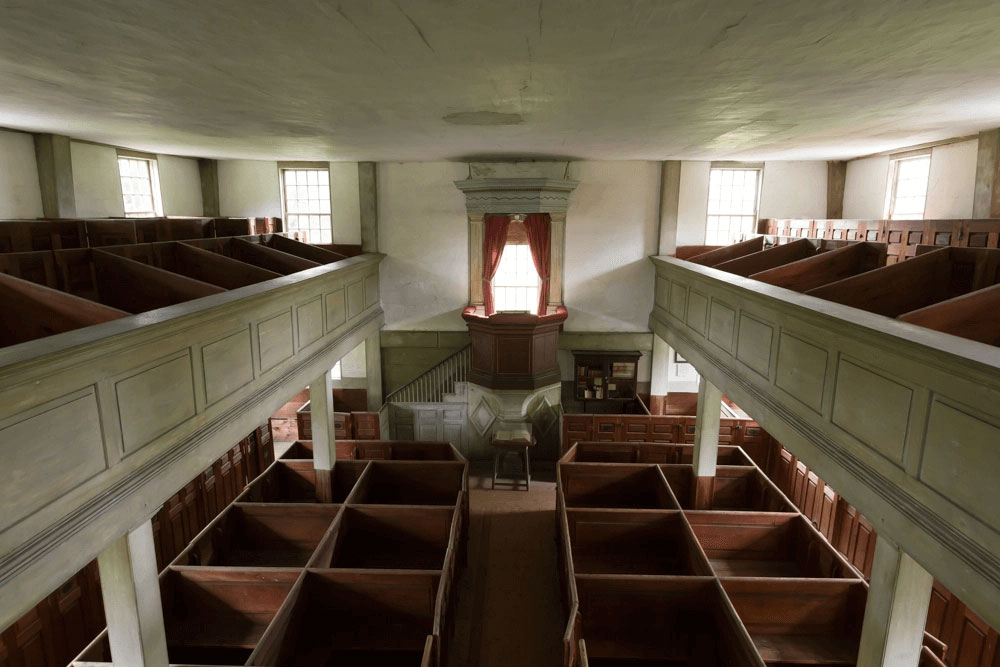
Courtesy of Waldoborough Historical Society
Geography is destiny, they say. It certainly isolated Waldoboro’s Germans because their settlement was on one side of the bay while the English were on the other. And in those days, there were no roads, nor a ferry for traversing to the other side.
The Germans had also come from a feudal culture. They understood farming, not industry. They spoke a different language. And they worshiped differently.
In reading through The History of Broad Bay and Waldoboro by Jasper Stahl (arguably one of the most comprehensive histories written of any town, let alone Waldoboro), one might conclude that Waldoboro’s history is one of division, rancor and suspicion. No issue seemed off bounds. Argument and strife were embedded in land, politics, faith, disparities, government and education. And as a result, people formed new communities not only by location but by mutual passions.
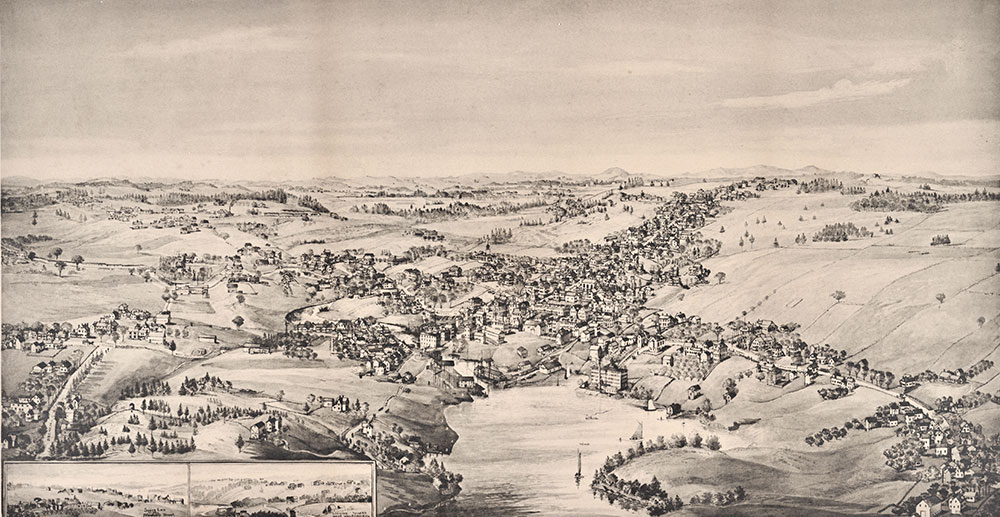
So, it’s incredible that in 1773, people were able to form an official town in a landscape of resentment and disagreement. But they did, and they laid out long borders that included all the disparate communities tucked in the north, south, east and west. They named the town Waldoboro. It is the same town that stands at the head of the river today.
There was ambition behind establishing a town geographically this large. Already there was shipbuilding. With forests dense with trees for milling and shaping masts, with deposits of granite, with a location at the head of a river with jetties and points for wharves plus a tidal river with a channel deep enough for launching ships, Waldoboro was well situated for an entire industry of shipbuilding. And indeed, shipbuilding ballooned.
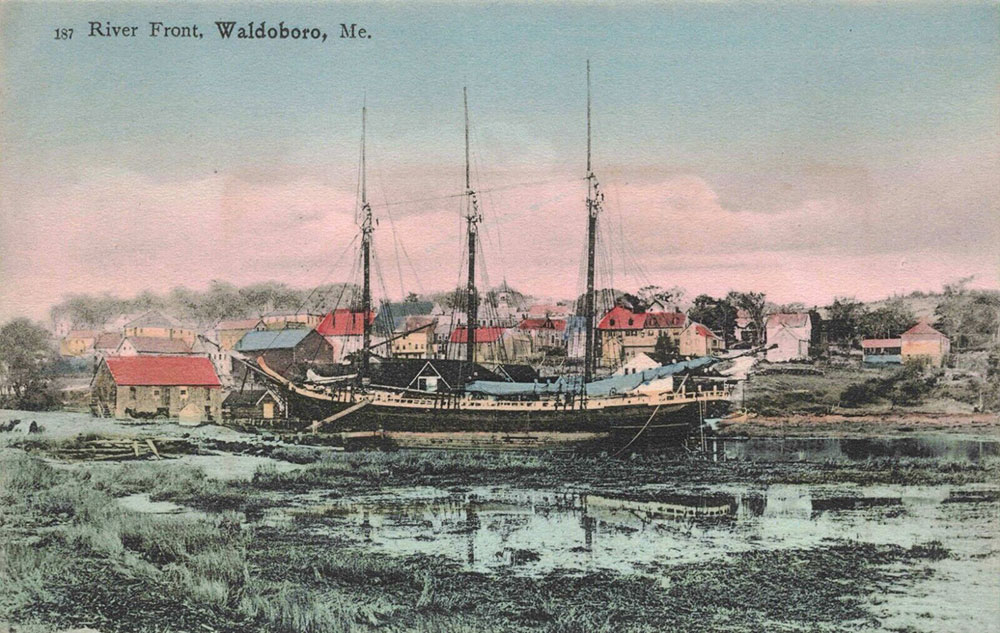
Courtesy of Waldoborough Historical Society
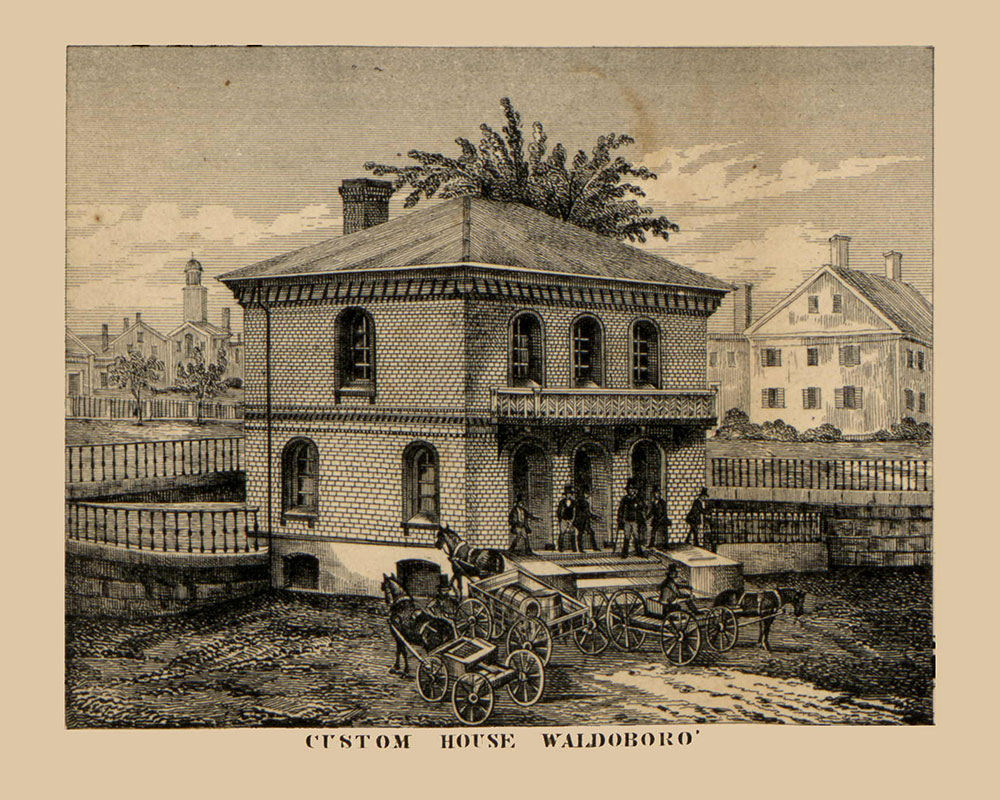
Courtesy of Waldoborough Historical Society
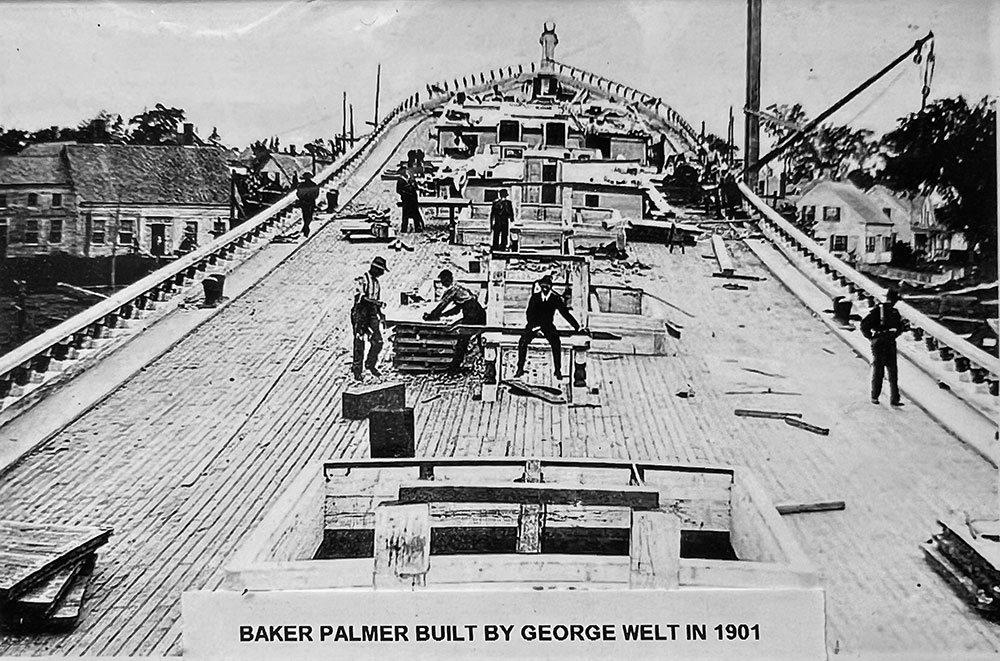
At its zenith in 1850, they launched 24 ships. From as early as the 1830s through the 1850s there were fourteen shipyards and a town population almost equal to what it is today. Shipbuilding put Waldoboro on the map. It is one of the reasons they established a customs district in 1799 and built a wooden structure right after. And when that perished in the 1854 fire, they erected a far grander one, out of brick.
The shipbuilding industry benefited almost everyone. It supported millers, carpenters, riggers, joiners and a whole bevy of tradesmen. Those not directly involved fashioned iron, milled wood, tanned leather, fermented beers, and farmed and fished. In these years there were marble and granite yards, a pottery, a graina mill, furniture and molding mills, a door sash and blind factory – even a carriage factory. The world’s first five-masted schooner, the Governor Ames, was built and launched in Waldoboro on Dec. 1, 1888. It was a grand feat.
But even before that ship sank, Waldoboro had ended its shipbuilding with the 1904 launch of the Harwood Palmer, the last to be built here. But it was a decline that had already started after the Civil War. Steam-powered and steel-built ships were replacing the sail-powered ships of Waldoboro.
And at the same time, and for no other reason than old age, the legends of Waldoboro, the builders and leaders who had built and steered Waldoboro’s boom, were also dying.
Courtesy of Waldoborough Historical Society
So, Waldoboro’s younger leaders looked for new industries that could sustain the population. They joined with investors and built two factory spaces. They eyed shoe manufacturers because that industry had taken off in the Northeast, despite its reputation for being fly-by-nights, leaving when the tax breaks ended. And so, a couple of shoe manufacturers came to Waldoboro. And then they left.
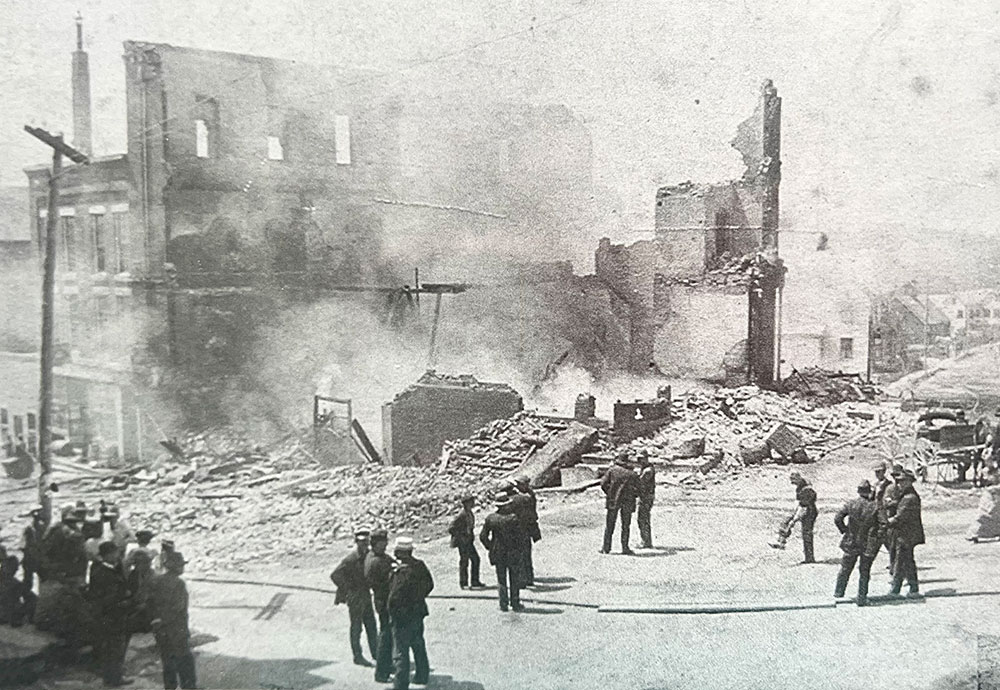
Bad luck follows bad luck, they say, and it certainly did in Waldoboro, with a series of three fires. Worse, they came at a time when there were no wealthy shipbuilders to rebuild as they had done in the past.
Courtesy of Waldoborough Historical Society
The first was in 1892 and it took out a couple of mills just upstream from the town center. The second one, in 1893, razed a warehouse, a tenement building, some furniture storerooms and a hotel. And it gutted the lower part of Main Street and part of Jefferson Street.
In 1900, a third fire obliterated an entire block, once considered the town’s jewel. That blaze destroyed The Exchange Hotel, the Knights of Pythias Hall, the Medomak National Bank, NC Austin’s department store, a grocery, and the telegraph office. Waldoboro’s two small fire trucks simply didn’t have the power to extinguish the original attic fire that started the conflagration.
In the aftermath, the businesses and the town sought to prevent another fire of that magnitude. But nobody could agree about funding hydrants. The issue went back and forth. Some proposed twenty hydrants but others protested. It took eight years for everyone to agree on ten hydrants.
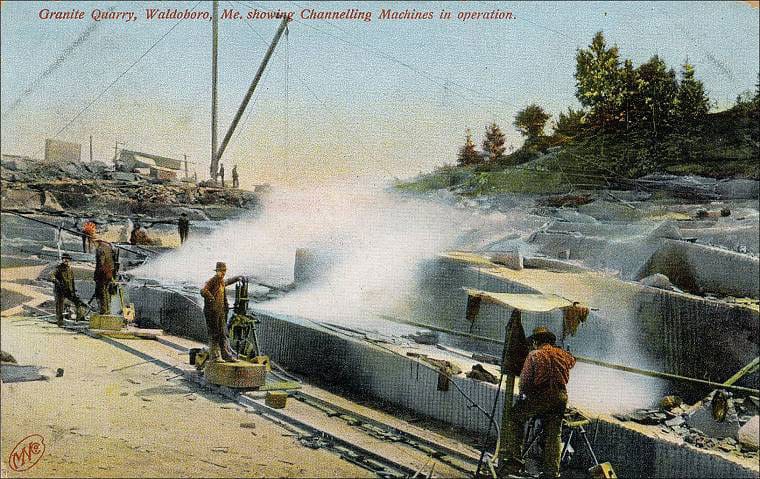
Through these years and after, a variety of businesses took hold. Granite quarrying was a thing in the early 1900s when a medium-sized vein was found. Waldoboro’s granite went into building the Armory at the Naval Academy in Annapolis, The Buffalo Savings Bank in Buffalo, and The Chemical National Bank in NYC, among others.
Courtesy of Waldoborough Historical Society
A canning operation called the Waldoboro Packing Company, set up a factory next to some of Waldoboro’s farms, all the closer to bring in the squash, corn, beans and pumpkin to be canned.
And all over Waldoboro, families erected barns for poultry farms for eggs and chicks. In not much time, Waldoboro became one of Maine’s largest egg suppliers in that era.
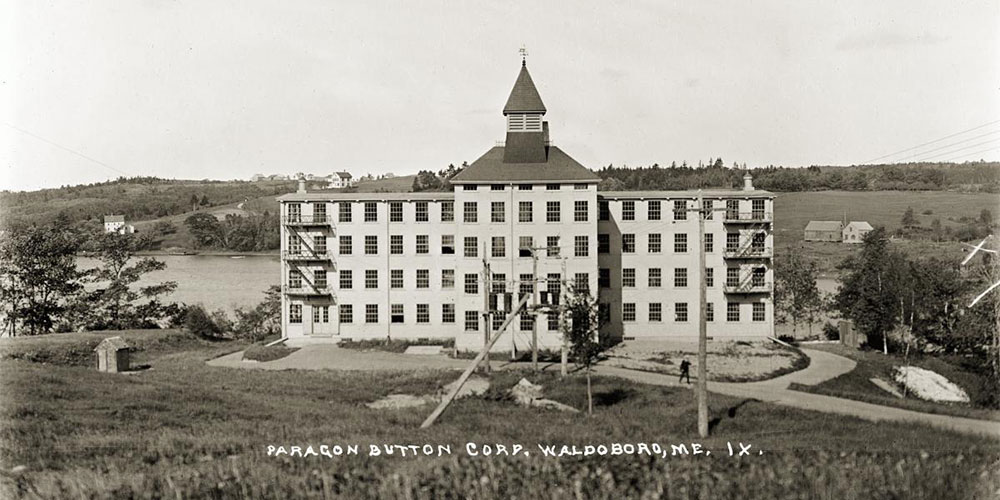
And finally, for the Waldoboro-built super-structure of a factory, Paragon Button Company moved in, where a bevy of workers cut buttons from seashells.
Downtown, businesses sprung up from the literal ashes. They might not have had the glamor of earlier years, but they served the town and included two grocery stores, a pharmacy or two, a candy store, a few barbers, a stable and so on.
Courtesy of Waldoborough Historical Society
Courtesy of Waldoborough Historical Society
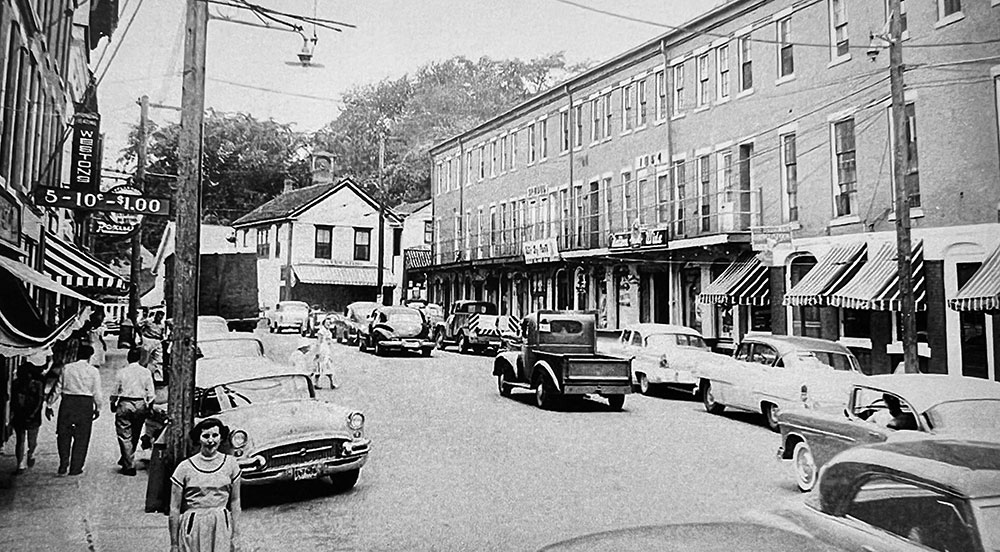
Post World War I, Main Street saw not only pedestrians but cars. A theater opened and a bowling alley followed. And when the Great Depression hit, people helped each other. The Waldo Theatre opened in 1936, a state-of-the art movie theatre. Wherever you lived in Waldoboro, with a car, you could go from one side of the river to the other, or travel north to farm country. It was an era of new freedom.
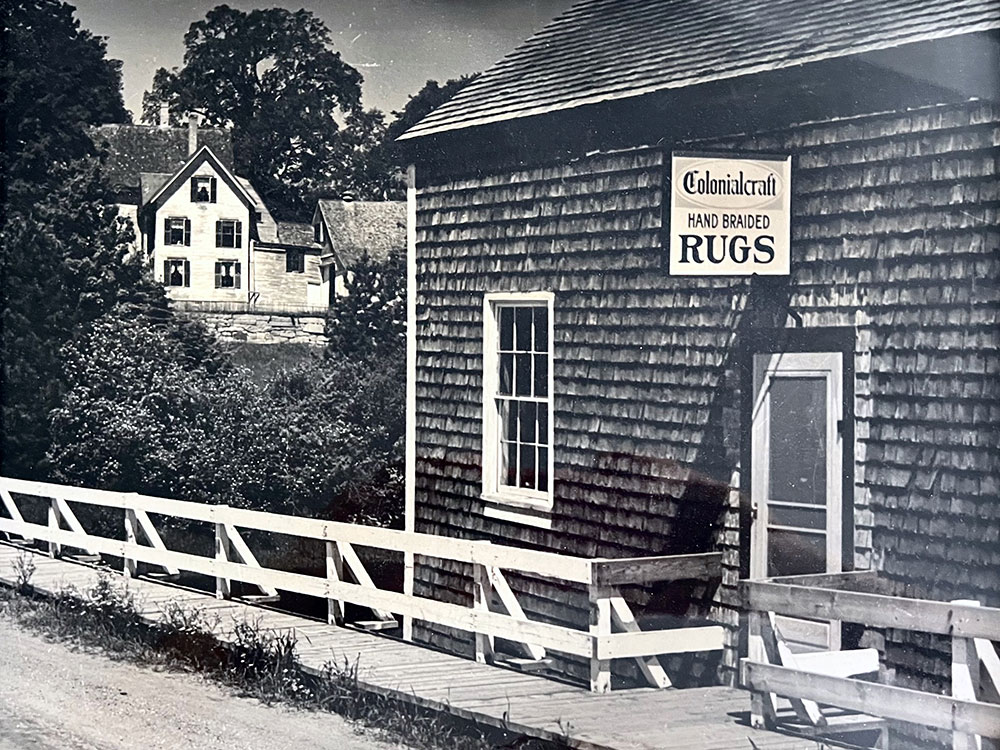
After World War II, other small businesses popped up, like the Colonial Rug Company run by my aunt Grace Bean and where my mother worked. Inside what was once an old sail loft, women braided rugs, a time-honored tradition for using leftover scraps of fabric. But this was no mere quaint and forgotten art. Colonial Rugs were carried in the best department stores of New York, Chicago and San Francisco.
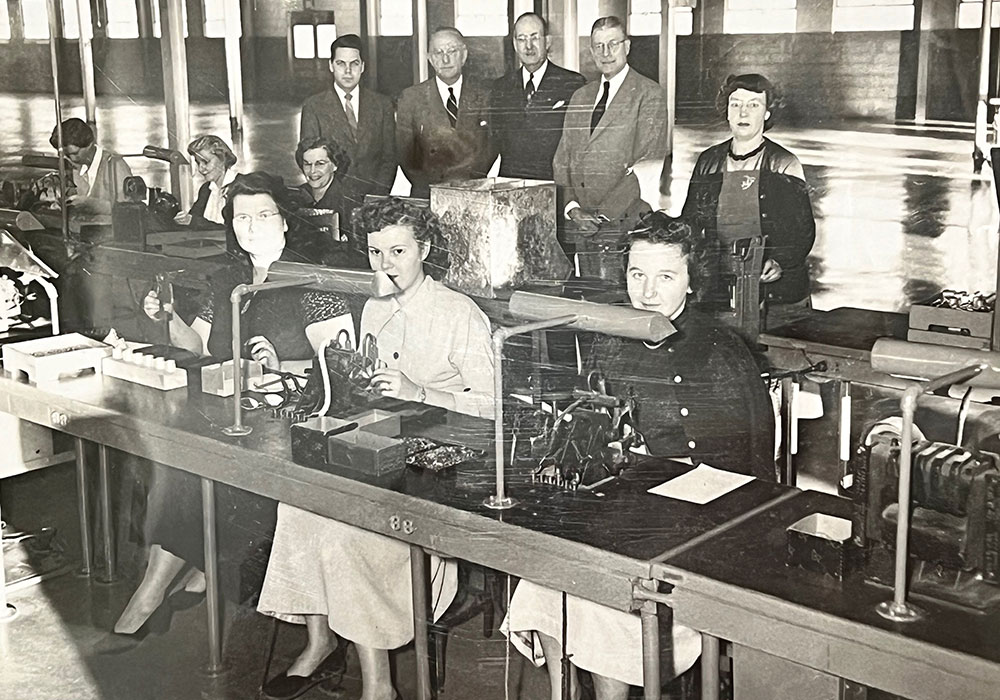
But the most notable addition to Waldoboro was Sylvania’s arrival in 1951. They set up their operation for making the filaments inside lightbulbs inside the second Waldoboro-built factory. That factory ran 24-hours a day with three shifts of workers. It required fine work, and I’m told that Waldoboro’s plant was the most accurate and exacting of all of Sylvania’s plants.
At one point, I’ve heard up to 600 people worked there. Right or wrong, there was so much traffic at shift changes, they had to hire a policeman to direct it.
It may have employed a tiny fraction of the shipbuilding industry, but Sylvania nonetheless was transformative for Waldoboro. With union wages, families could split shifts. For the first time, they could afford to buy a home here.
Little by little, over the years, it was cleaned. And in a few years, it will become Medomak River Community Park.
Courtesy of Waldoborough Historical Society
Courtesy of Waldoborough Historical Society
For those who remember, downtown Waldoboro used to have two markets plus a butcher. It had a 5 & 10, two banks, a newsstand, a shoe store, a jeweler’s shop, a hardware store or two, a clothing store, an art gallery or two, a cinema, and a bowling alley with two lanes. And on the upper floors of those blocks, apartment housing. There were even summer street dances, with live swing bands!
Yet for all this, Waldoboro was a rough and tumble town in the 60s, 70s, and 80s, and often even lawless. Of course, this isn’t in the history books, but it’s what I remember and moreover, what many whom I’ve interviewed recount, too. If you lived through those years here, it’s just something you know and it’s always confirmed when I talk about those times. And then with a sly smile, they’ll rebut it: “Waldoboro isn’t like that now.” And they’re right. We are past those years. But the reputation lingers. Ask any real estate agent.
Those were the years when one by one, the Friendship and Jefferson Street stores closed. That was the time when Sproul Block had started to crumble. But when a developer tore it down to erect low-income housing, he eliminated that block’s retail trade. That 1982 decision is one main reason Waldoboro has barely gentrified.
In these years, Sylvania was cutting its workforce until it was a quarter of its size. Then it changed hands, and the new owners cut back some more. The plant finally closed in 2006. In its wake it left residual cancers in some of its workers and contaminated groundwater. In those years Waldoboro, at least its downtown, felt like a shell of what it had once been. For years it sat vacant and untouched. For years it was classified a brownfield.
Of course, things were bad for any town that depended on manufacturing in those years. But Maine was Vacationland. Some of Waldoboro’s neighbors decided to pivot and take advantage of the moniker. After all, towns like Camden and Mt. Desert Island had been entertaining tourists since the 1850s, when summer visitors would first arrive by ship, then by train and then by car.
Waldoboro’s neighbors set up incentives for people to invest in small hotels. They encouraged eateries and restaurants and now their streets are full of them. They renovated their downtowns and harbors with benches and walkways. They advertised and worked with the State of Maine to encourage visitors. And they chronicled their town’s history in public places.
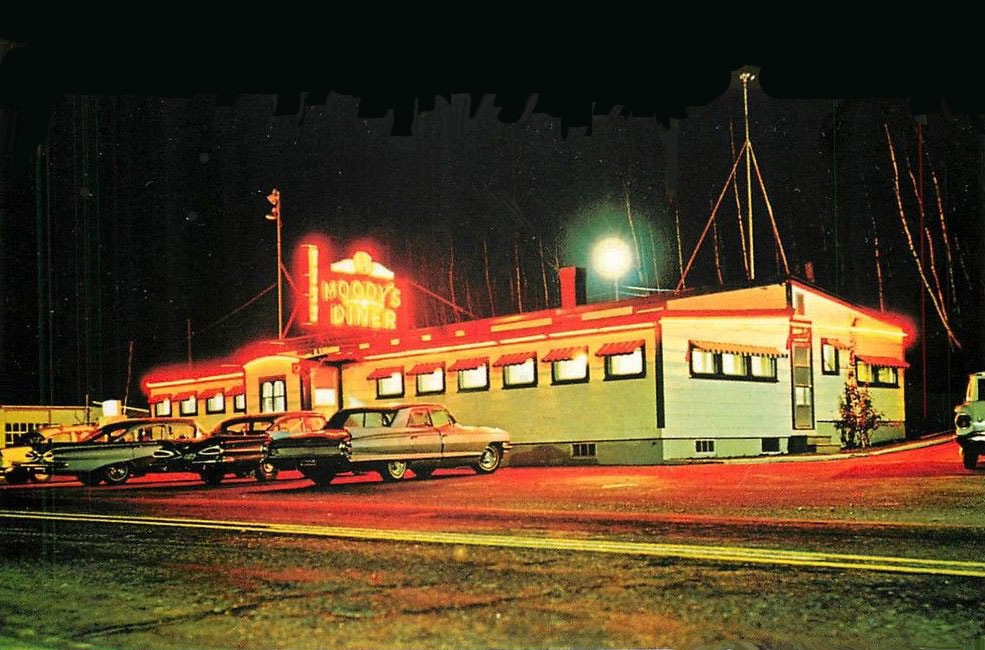
Waldoboro has not. Its single concession is Moody’s Diner and Cabins, but that doesn’t count because the cabins were first built in 1927, and the diner in the 1930s. And yes, it’s expanded to seat 104 people, but both pre-date any discussion of tourism.
For a host of reasons which include feelings around culture, finance, and history, Waldoboro has never sought tourism. Over the years, they have consistently voted against its development. I suspect the examples of Damariscotta, Thomaston and Rockland have spooked the town. Tourism there has forced local families off their own land. And Waldoboro’s residents were not going to leave the land and homes where they’d grown up.
Waldoboro is a town of clans – the Winchenbach’s, the Creamers, the Benners, the Achorns, the Reeds, and so on. These are names and families that go back generations here. It’s little wonder that they aren’t interested in selling the land that their families had held since the first settling of Waldoboro.
The census will tell you that Waldoboro is 79 square miles and 5, 135 residents, which makes our town the largest town in Lincoln County, both in mileage and population. Waldoboro also is the poorest town in Lincoln County with almost a fifth of the population living under the Federal Poverty Line. Hunger and homelessness have always been a challenge here.
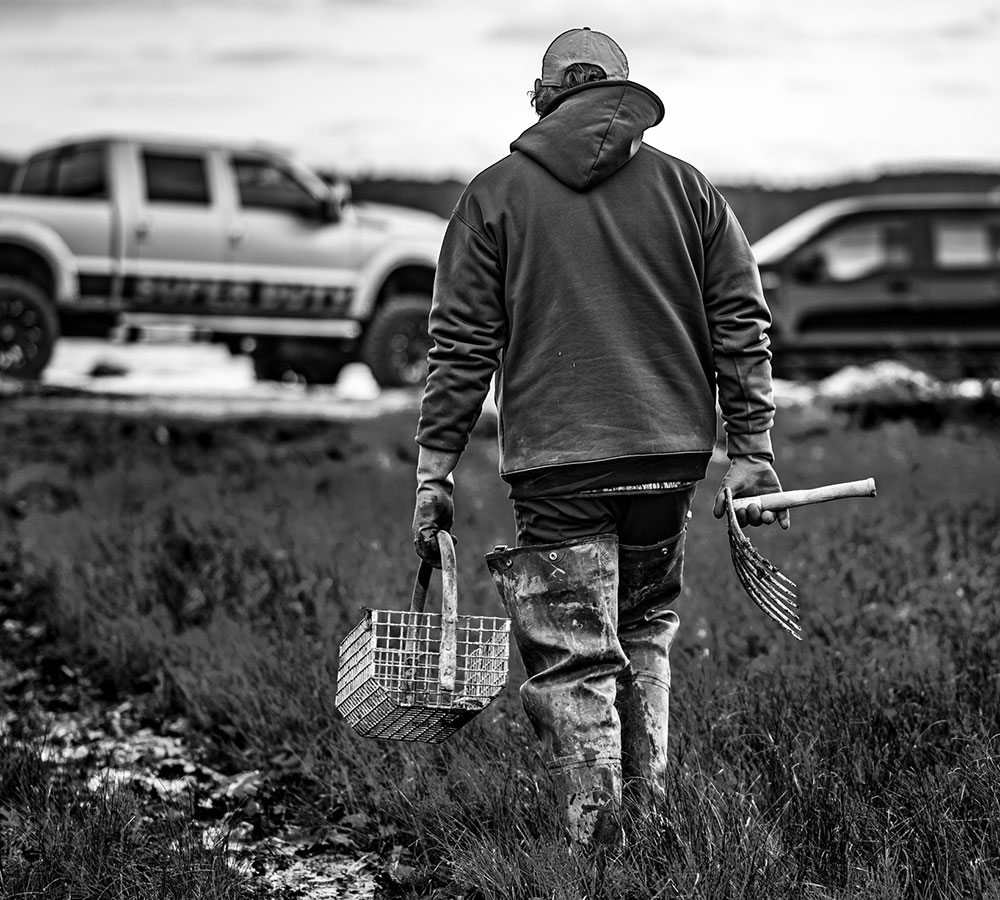
soft-shell clams.
Courtesy of Corey Cain Photography
As for work, education is the town’s largest employer. Clam digging follows, these days hovering now around with 150 who make a living from it. And from there, it’s Hannaford’s with their rotating crew of part-time workers. Then, a smattering of work at our three specialty industries: American Kelp and Ocean Organics for processing kelp or seaweed into a soil-enhancers for agriculture; and American Unagi where the glass eels caught by Waldoboro’s elvers are aqua-farmed until they’re big enough to go on the Japanese market.
And for everybody else, it’s a cobbled existence – bits and pieces of farming, caregiving, plumbing, handyman work, carpentry, property managing, lobstering and more. It’s a living, they say.
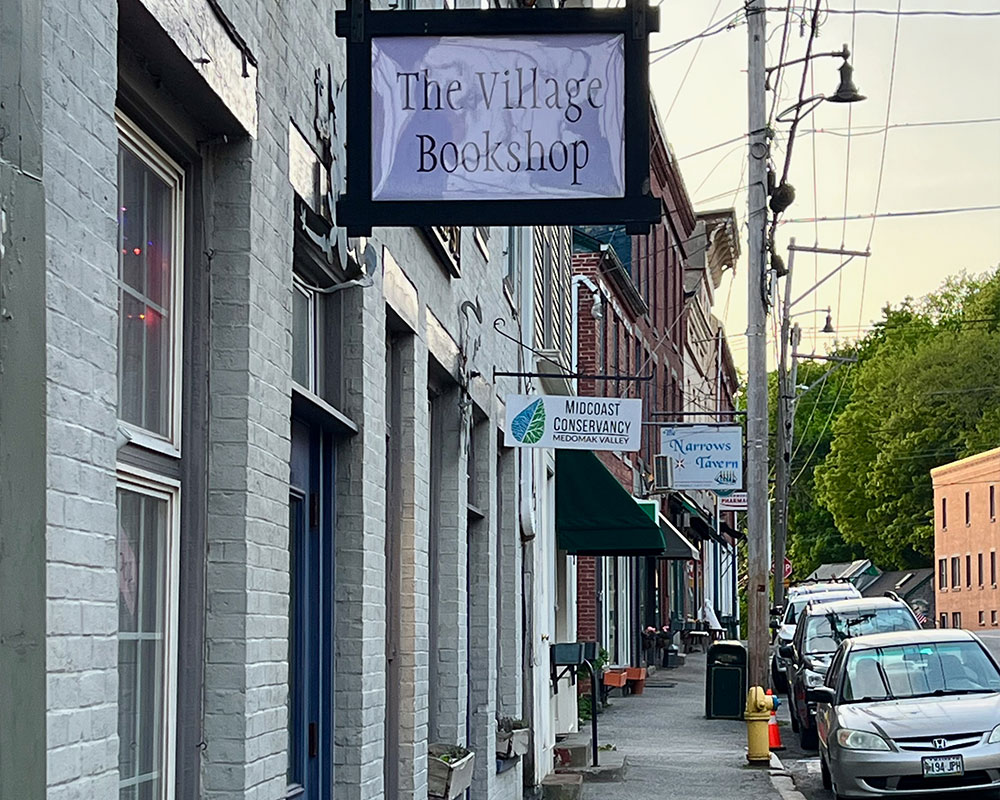
Waldoboro’s Route 1 is a plethora of gas stations between partial strip malls and fading buildings. How easy it is to just drive on through our town, stopping only at Moody’s for a biscuit and gravy or an ice cream cone. And even if you did get off and drive through town, its emptiness might lead you to conclude that there’s not that much beyond the pharmacy, a laundromat, a public library, a tavern and a used bookstore run by the library.
But there is! The Waldo, a 1936 art-deco theater, re-opened five years ago, freshly renovated to highlight its spare, elegant interior.
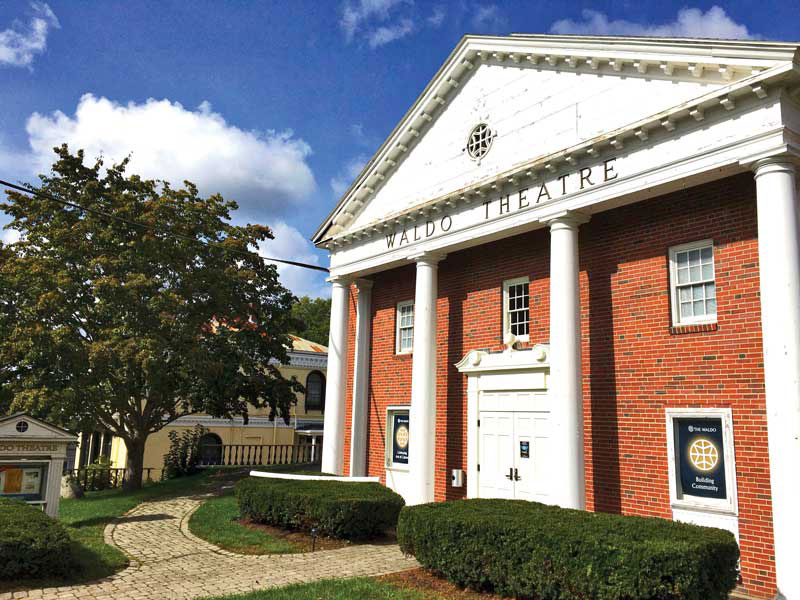
Courtesy of Mimi Steadman
To its right is the eclectic Waldoboro Inn, both an inn, a tavern with jazz nights and a pop-up restaurant a few days a week. To its left is Open House of History (inside the Custom House), a community space engaging and connecting people through Waldoboro’s history. Back down on Friendship Street, Perch, a rainbow flag hangs inside a fairly new coffee and cafe. We even have Riverside Tattoo Shop, our first tattoo parlor.
Most important for everyone living here, builders have broken ground for building a medical center as part of a partnership between the town and MaineHealth with a planned community center for increased outreach and education. This, too, is transforming.
And down on Friendship Street on Sylvania’s grounds, the future site of The Medomak River Community Park.
We are a cautious lot here, afraid of being disappointed. So we don’t say much. But we whisper it: “Something is happening here.” This is how we are rooting for all these ventures to thrive.
In the meantime, this is what I can say: if you have always lived here, your history is imprinted on your soul. If you have moved here, you, too, are a part of Waldoboro’s history. And if you don’t feel it yet, trust. It will seep into your being sooner or later.
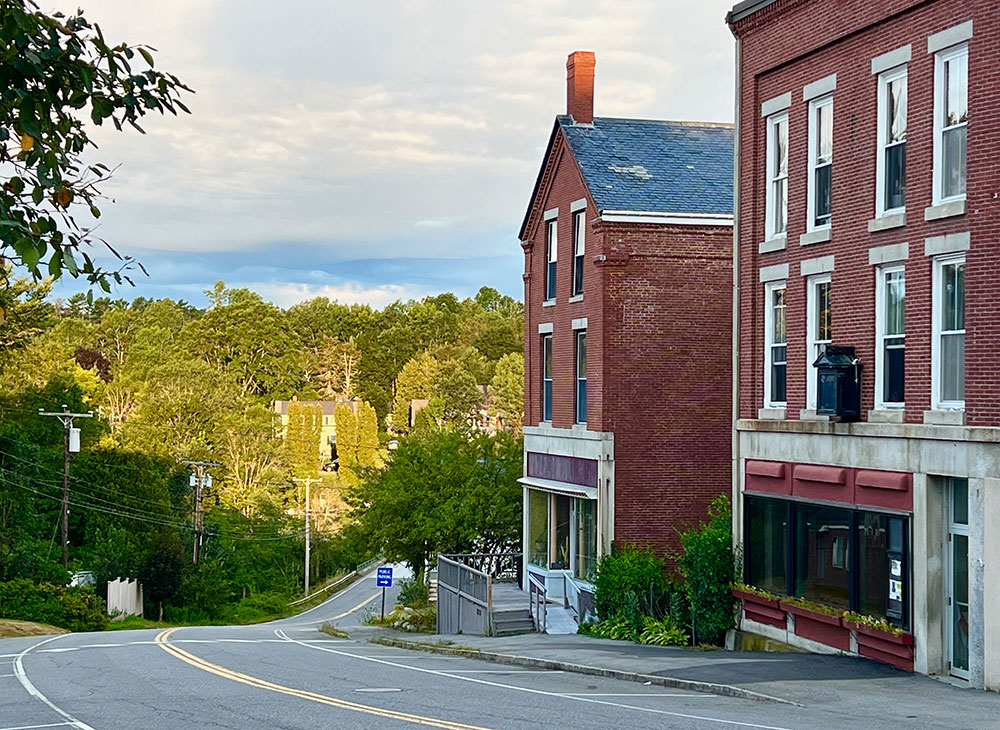
All you have to do is stand at the top of Main Street and listen to the cacophony of Waldoboro’s history. You can practically feel it underneath your feet.